Starting an amusement park is a capital-intensive business that typically takes 12 to 36 months from concept to opening day and requires between roughly $1 million for a small family park or indoor family entertainment center and $50 million or more for a destination theme park. Success depends less on the rides than on market research, a realistic financial model, phased funding, and disciplined operations. The critical early steps are choosing a park model that matches your capital, studying the catchment area within a 1–2 hour drive, running a feasibility study with a five-year cash-flow forecast, securing land with workable zoning, budgeting for 6 to 24 months of working capital, and sourcing certified suppliers. Most parks reach break-even in 3 to 7 years and can generate net profit margins of 15% to 30% when attendance, per-visitor spending, and maintenance costs are managed well.
Table of Contents
1. Why Most Park Projects Fail During Planning, Not Construction
An amusement park looks like a construction project, but it is really a business that happens to contain rides. The attractions are the visible part; the invisible part — attendance forecasts, operating costs, staffing, maintenance, and cash flow — decides whether the project survives. Industry experience across hundreds of new park developments shows that almost no serious project fails because the equipment was defective. Projects fail because the park model did not match the available capital, the demand forecast was optimistic, or the operating budget ran out before the park reached a stable visitor base.
That is why this guide treats planning as the core of the process. Each section moves from high-level strategy to concrete numbers: park type, market demand, financial modeling, capital budgets, permits, layout, ride procurement, installation, staffing, and the opening plan. It is written for first-time park investors and experienced operators alike, and it applies to small family parks, indoor family entertainment centers (FECs), water parks, and larger theme park rides projects.
The single most common planning error is skipping the feasibility study. A feasibility study costs a fraction of one ride and routinely saves investors from committing millions to a site that cannot generate enough visits. Treat it as mandatory, not optional.
2. Step 1: Choose a Park Model That Matches Your Capital
“Amusement park” describes very different businesses with very different cost structures. A family park in a mid-sized city, an indoor FEC in a shopping mall, and a destination theme park share almost nothing except the word “park.” Choosing the wrong model is the most expensive mistake you can make, because every later decision — land, rides, staffing, marketing — follows from it.
| Park Model | Typical Audience | Site & Scale | Investment Range | Main Revenue Drivers |
|---|---|---|---|---|
| Family Park | Local families, schools | 1–5 hectares, urban edge | $1M–$5M | Entry tickets, ride passes, food |
| Indoor FEC | Year-round local visitors | 1,000–8,000 m², mall or standalone | $500K–$3M | Memberships, games, parties, café |
| Thrill Park | Teens, young adults | 3–10 hectares | $5M–$25M | Gate, headline rides, events |
| Water Park | Families, seasonal visitors | 2–10 hectares, warm climate | $5M–$40M | Day passes, cabanas, F&B |
| Seasonal Carnival Park | Regional visitors, events | Rental land, 2–8 hectares | $300K–$2M | Per-ride tickets, food, events |
| Destination Theme Park | Tourists, national visitors | 20+ hectares plus resort | $100M+ | Multi-day tickets, hotels, IP, merchandise |
As a practical rule, if you do not have institutional funding, avoid designing a “mini-Disney.” Start with a model that matches your capital, your team’s experience, and local demand. The most common successful entry point is a small-to-mid-size family park or an indoor FEC, both of which can grow through phased expansion. A family park typically anchors its offer with family rides and a dedicated kids rides zone, which drive repeat visits because parents feel safe and children are the primary decision-makers.
- How much capital can I realistically raise or risk?
- Can the local market support the model year-round?
- Do I have operational or theme-park experience?
- Is the site large enough for the model and future expansion?
- Target park model and positioning statement
- Target guest profile and average visit length
- Target attendance in year 1 and year 3
- Rough capex ceiling for phase one
3. Step 2: Research Market Demand Before You Buy Anything
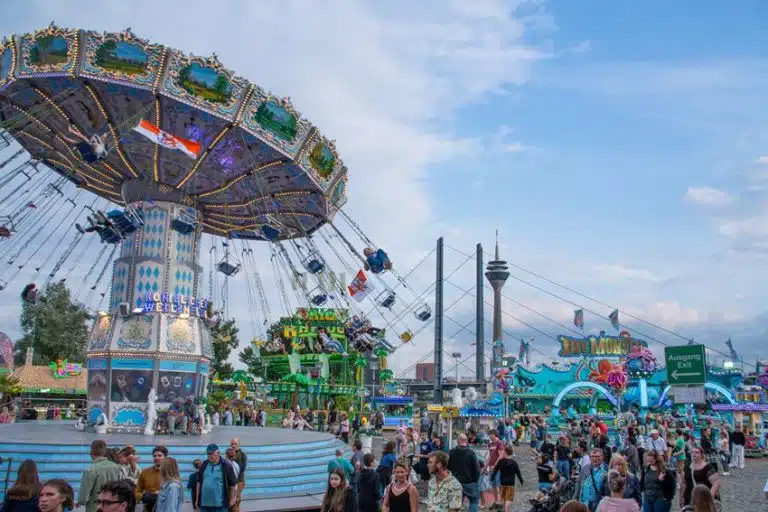
Most new parks underestimate how dependent they are on drive-to, day-trip visitors. Unless you have a powerful brand or a tourism ecosystem around you, your park lives or dies by local and regional demand. A park in a city of 300,000 with two existing competitors is a different business from a park on a tourism corridor with no nearby competition, even if the rides are identical.
The core demand question is simple: how many paying visits can this site realistically attract per year? Answer it with data, not optimism. The four inputs every demand study needs:
- Catchment population — population within a 1–2 hour drive, broken down by age and family structure.
- Competition — existing parks, water parks, malls with FECs, and seasonal festivals; estimate their attendance and pricing.
- Tourism flow — if you target visitors, count hotel nights, airport arrivals, and tour operators in the region.
- Seasonality — usable operating months per year; weather windows for outdoor rides and the local school calendar.
☑ Median income and family spending
☑ Competing venues map and pricing
☑ Seasonal attendance curve
☑ School calendar and public holidays
☑ Tourism data (if applicable)
☑ Land zoning and development plan
☑ Local government support signals
Use the research to build three attendance scenarios — conservative, base, and optimistic. Most banks and investors will test your project against the conservative case, so make sure the park still has a credible path to profitability there.
4. Step 3: Build a Feasibility Study and a Realistic Financial Model
A feasibility study is the document that tells you, before you spend on design or rides, whether the project can generate enough revenue to justify the investment. A credible study contains a site comparison, attendance scenarios, competitive positioning, a rough master plan, and a five-year financial model with best, base, and worst cases.
The financial model revolves around three numbers:
- Annual attendance — catchment population × market penetration rate × average visits per guest per year.
- Revenue per visit — ticket or wristband price plus in-park spending on food, games, and merchandise. A healthy small park typically sees $8–$15 per visit in blended spending.
- Operating margin — revenue minus staffing, maintenance, utilities, insurance, and marketing. Well-run parks operate at 25%–40% EBITDA margins before financing.
Break-even attendance is found with a simple formula: fixed annual costs ÷ (revenue per visitor − variable cost per visitor). For example, if fixed operating costs are $900,000 per year, revenue per visitor is $12, and variable cost per visitor is $4, the park needs $900,000 ÷ $8 = 112,500 visits per year just to cover operating costs — before any return on the initial investment.
| Scenario | Small Family Park | Regional Thrill Park |
|---|---|---|
| Total investment (phase 1) | $3M | $15M |
| Target annual visits | 200,000 | 450,000 |
| Revenue per visit | $12 | $18 |
| Annual revenue | $2.4M | $8.1M |
| Operating costs (incl. staffing, maintenance) | $1.7M (70%) | $5.7M (70%) |
| EBITDA before financing | $720K | $2.4M |
These are illustrative figures, not quotes — every market differs. The point is that the math must work before the design does. If the base-case model cannot cover operating costs and debt service by year three, the project needs a smaller phase one, a different model, or a better site.
5. Step 4: Understand the Real Startup Costs (CAPEX + OPEX)
New investors consistently underestimate two things: site and infrastructure costs, and the working capital needed before the park becomes self-sustaining. A common rule of thumb is that rides account for only 30%–45% of total capital expenditure in a new park. Land development, buildings, utilities, theming, and professional fees absorb the rest.
| Capital Cost Category | Typical Share of CAPEX | What It Covers |
|---|---|---|
| Land & site development | 10%–25% | Land purchase or lease, grading, drainage, roads, utilities |
| Construction & infrastructure | 25%–40% | Entry buildings, food courts, restrooms, power, water, paving |
| Rides & attractions | 30%–45% | Equipment purchase, freight, installation, foundations |
| Theming, landscaping & signage | 5%–10% | Themed facades, planting, wayfinding, entrance design |
| Design, permits & soft costs | 5%–10% | Master planning, engineering, permits, legal, insurance |
| Pre-opening & working capital | 10%–20% | Staffing, marketing, inventory, 6–24 months of runway |
Ride budgets vary widely by type, size, and theming. The ranges below are typical manufacturer price bands for new equipment and should be treated as planning figures, not quotes. Freight, customs, foundations, and installation are normally additional.
| Ride Type | Typical Price Range (New) | Typical Throughput |
|---|---|---|
| Bumper cars | $20K–$80K | 400–800 guests/hour |
| Trackless train | $20K–$90K | 200–600 guests/hour |
| Carousel | $30K–$150K | 400–800 guests/hour |
| Flying chair ride | $40K–$180K | 500–900 guests/hour |
| Pirate ship | $60K–$300K | 500–1,200 guests/hour |
| Drop tower | $80K–$350K | 400–900 guests/hour |
| Pendulum ride | $100K–$500K | 500–1,000 guests/hour |
| Family roller coaster | $250K–$1.5M | 600–1,200 guests/hour |
| Ferris wheel | $100K–$1M+ | 800–1,500 guests/hour |
On the operating side, plan for these recurring costs: staffing is the largest line item at roughly 35%–45% of revenue; maintenance typically runs 3%–8% of revenue or 2%–5% of equipment value per year; utilities, insurance, marketing, and consumables make up most of the rest. Because new parks rarely reach target attendance in year one, set aside 6–24 months of operating runway as working capital. This buffer is what separates parks that survive a slow opening season from parks that close before their second summer.
6. Step 5: Write a Bankable Business Plan and Structure Funding in Phases
Investors rarely fund ideas; they fund teams with a plan, realistic assumptions, and controls on risk. A bankable amusement park business plan should include the park’s positioning and target market, the ticketing model (pay-per-ride, wristband, or day pass), the ride mix strategy with capacity assumptions, a marketing plan for pre-launch and the first year, an operating plan covering staffing and maintenance, and financial projections with CAPEX, OPEX, revenue, and cash flow.
Funding options commonly used in the industry include equity investors and strategic partners, bank loans secured against land and equipment, government grants and tourism incentives, and joint ventures with real-estate or tourism developers. Each comes with different expectations about returns and control, so match the funding source to the project stage.
Phase one opens with a focused ride mix, core facilities, and enough capacity for projected year-one attendance. Phase two adds headline rides, theming, and event infrastructure only after real attendance data confirms demand. This approach limits downside exposure and lets later phases be funded from operating cash flow rather than new equity.
For projects outside their home country, factor in currency risk, import duties, and the lead time of international procurement. Many operators phase the opening around a high-demand season and place equipment orders 6–12 months ahead of the target opening date.
7. Step 6: Secure Land, Zoning, Permits, and Safety Compliance Early
Permit timelines routinely surprise first-time developers. A typical checklist includes a business license, construction and building permits, an amusement operation license, fire safety approval, food and beverage permits, electrical and mechanical approvals, ride inspection and registration, and liability insurance documentation. In many jurisdictions these approvals take 30–90 days or more, and ride-specific inspection can only happen after installation. Start the process as soon as the site is selected, not after construction begins.
- Confirm ride inspection authority — identify who inspects and registers each ride in your country or state.
- Require recognized standards — design, manufacture, operation, and maintenance should align with EN 13814, ASTM F24 practice standards such as ASTM F1193 and F2291, and ISO 17842. CE marking confirms conformity with EU safety requirements.
- Prepare technical documentation — manuals, drawings, load test reports, and maintenance records must be available in the operating language.
- Set up maintenance and inspection schedules before opening day.
Standards differ by market: North America follows ASTM F24, Europe follows EN 13814, and international projects often use ISO 17842, while Russia and CIS markets apply local GOST requirements alongside imported certificates. Always confirm with your local authority which standard applies to your project. A deeper explanation of the certification landscape is available in our ASTM and EN 13814 safety standards guide.
Do not order rides before zoning and the operation license are secure. Re-zoning a site can add 6–12 months and significant cost to a project that already has committed equipment deliveries.
General liability, property, ride-specific coverage, workers’ compensation, and business interruption. Premiums depend on ride count, park size, and claims history — budget them from day one.
8. Step 7: Plan the Master Layout and Guest Flow Early
Layout mistakes are expensive to fix after construction. Poor guest flow creates bottlenecks at popular rides, reduces spending in food and retail areas, and lowers repeat-visit rates. A professional master plan divides the park into zones — entrance and admissions, family and kids area, thrill zone, food and rest areas, retail, and quiet or performance spaces — and connects them with a clear circulation loop that avoids dead ends.
Three layout principles matter most for operations:
- Distribute food and restrooms across the park so guests do not cluster in one area.
- Place high-capacity rides near the entrance to absorb crowds early in the day, and anchor the back of the park with a signature attraction that pulls guests through retail and food zones.
- Design queue and emergency access from day one: queue lengths should match peak throughput, and every ride needs service access plus emergency vehicle routes.
Capacity planning uses simple arithmetic. If a ride carries 600 guests per hour and the park expects 2,000 guests on a peak day with a 4-hour ride window, that single ride covers 1,200 of the potential ride-seekers. Multiply required ride capacity across the mix and compare it with projected attendance to decide how many units of each ride type you need — this is the same math operators use to justify every future addition.
9. Step 8: Select the Right Rides and Vet Suppliers Like a Professional
The ride mix is the park’s product line, and it should be built for the target guest profile, not for the owner’s favorite ride. A balanced mix for a family-oriented park typically allocates 40%–50% of capacity to family and kids rides, 20%–30% to mild thrill rides, and the remainder to classics, flats, and entertainment. Anchor attractions — the one or two rides people name when they describe your park — matter more than total ride count.
Across the industry, proven anchor and supporting equipment includes a ferris wheel for skyline presence, a carousel as a classic family anchor, bumper cars and a flying chair ride for reliable throughput, a trackless train for kids and park circulation, and a pirate ship ride or drop tower rides where the market wants mild thrills. Thrill-oriented parks add pendulum rides and a family roller coaster, while kids zones are often built around a self-control plane and other junior attractions.
| Evaluation Criterion | What to Check | Why It Matters |
|---|---|---|
| Certifications | CE marking, ISO 9001, EN 13814 / ASTM F24 compliance documentation | Gate requirement for permits, insurers, and inspectors |
| Reference projects | Installed parks similar to yours, contactable references | Best predictor of delivery and after-sales behavior |
| Documentation | Manuals, drawings, test reports, spare parts list | Required for inspection and long-term maintenance |
| Installation support | On-site supervision, training, commissioning included? | Protects your schedule and safety acceptance |
| Spare parts & lead time | Availability, pricing, and delivery time for critical parts | Downtime cost far exceeds part cost |
| Delivery schedule | Confirmed production and shipping timeline, penalty clauses | A delayed ride delays your entire opening season |
New vs. used is a genuine trade-off. Used rides cost 30%–60% less but add inspection, re-certification, and often refurbishment costs, and the original documentation may be incomplete. New rides carry full certification, warranty, and manufacturer installation support — which matters when your opening date depends on a clean inspection. For a deeper view of price differences between suppliers, see our analysis of why ride prices vary between suppliers.
For international buyers, plan the import chain early: confirm customs duties and taxes, check whether the certificate of origin qualifies for preferential tariffs, arrange container shipping and port handling, and budget for freight and insurance. Suppliers experienced in export markets provide export documentation, packing lists, and installation support as part of the package — confirm exactly what is included before signing.

10. Step 9: Construction, Installation, and Commissioning
Installation is an engineering project, not assembly work. It combines site preparation, foundations or ballasting, lifting, mechanical and electrical assembly, safety testing, and regulatory inspection. Typical timelines: most family rides install in 3–10 days, while large rides such as ferris wheels, pendulum rides, and roller coasters take 2–8 weeks, excluding 7–28 days of concrete curing where fixed foundations are required.
Fixed rides normally need engineered concrete foundations sized for soil bearing capacity and dynamic loads. An alternative growing in popularity is the foundation-free rides approach, which uses designed steel ballast and installs on flat hard surfaces without pouring concrete. Foundation-free systems can shorten installation time by 40%–60%, which is attractive for seasonal parks, rental sites, and phased openings. The choice between the two is covered in our comparison of foundation-free vs. fixed rides, and the engineering details in our foundation construction guide.
Commissioning is where projects are won or lost. Before opening, every ride needs functional testing of all cycles, load testing at rated capacity, emergency stop and brake tests, electrical insulation and grounding checks, and a documented trial operation witnessed by the inspecting authority. Keep the full acceptance file — installation reports, as-built drawings, electrical diagrams, and test certificates — for the ride’s entire operating life; insurers and inspectors will ask for it repeatedly. The same discipline applies to specific equipment classes, such as the carousel installation guide and bumper car installation and operation guidance.
Schedule installation so commissioning finishes 4–6 weeks before your target opening. That buffer absorbs inspection delays, weather, and the inevitable list of small fixes found during trial operation — without forcing you to open before the park is truly ready.
11. Step 10: Staff, Train, and Maintain for the Long Term
Operations are where parks make or lose their money. Staffing is the biggest operating cost, and it is also the biggest safety lever. A typical park employs one ride operator per ride per shift, plus admissions, food and beverage, cleaning, and security staff. Maintenance teams of one technician per 10–15 rides are common for small-to-mid-size parks, with certified specialists for electrical and structural work.
- Training programs must cover daily pre-opening checks, dispatch and evacuation procedures, and emergency response — documented and refreshed every season.
- Maintenance discipline: follow the manufacturer’s schedule, keep spare parts for critical components, and log every inspection. Our amusement equipment maintenance checklist shows how systematic upkeep extends equipment life.
- Daily, weekly, and monthly inspections by trained staff catch wear before it becomes a failure — and they are also what your insurance and inspector expect to see.
Budget maintenance at 3%–8% of revenue or 2%–5% of equipment value annually. Cutting maintenance to save money in year one is the fastest way to shorten equipment life and raise insurance costs in year three. Guests also vote with their feet: a ride that is down, a queue that is unclear, or a staff member who cannot answer a question all reduce per-visit spending and repeat visits.
12. Step 11: Plan the Marketing and Opening Launch
Opening day is not the start of marketing; it is the end of the pre-opening campaign. Start building the brand 6–12 months before opening: register the name and domain, build a website with opening dates and ride list, run social channels showing construction progress, partner with local schools, kindergartens, and hotels, and sell early-bird tickets and season passes before the gates open. Pre-sold passes do double duty — they generate cash flow and they tell you how many guests to expect on day one.
Plan the launch in two stages: a soft opening for invited guests, staff, and local media to shake out operational issues, followed by the public opening once daily operations are smooth. Revenue should not rely on the gate alone. The strongest parks build several streams: tickets and passes, food and beverage, games and merchandise, group and school programs, birthday parties and corporate events, and premium options such as fast-track passes and parking. Season passes in particular convert occasional visitors into year-round revenue and smooth out seasonal cash flow.
- Brand, website, and social channels
- Early-bird and season-pass presales
- School and group partnerships
- Media day and soft opening
- Entry tickets and ride passes
- Season passes and memberships
- Food, beverage, and merchandise
- Events, parties, and premium services
13. ROI and Payback: What the Numbers Really Look Like
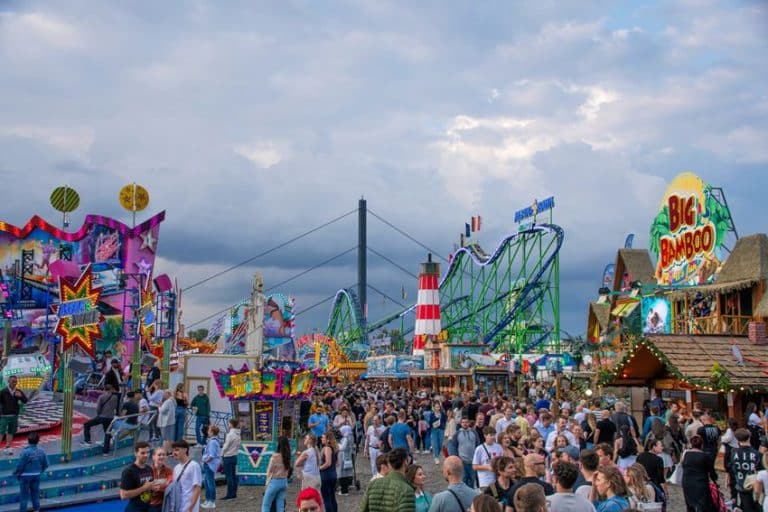
Amusement parks are long-horizon assets. A well-run park typically earns operating profit margins of 15%–30% once attendance stabilizes, but it takes several years to reach that state. The table below shows typical payback ranges by project scale — treat them as planning benchmarks, not promises, because local demand, pricing, and operating discipline vary widely.
| Project Scale | Typical Investment | Typical Payback | Key Risk Drivers |
|---|---|---|---|
| Small family park / FEC | $1M–$5M | 3–6 years | Attendance ramp, staffing costs |
| Regional park | $10M–$50M | 5–8 years | Seasonality, competition, financing cost |
| Destination theme park | $100M+ | 8–15 years | Tourism dependence, capital intensity |
In emerging markets, payback expectations are often shorter because land and labor costs are lower and leisure spending is growing quickly; in mature markets, payback is longer but cash flow is steadier. What separates profitable parks from struggling ones over time is rarely the headline ride — it is repeat visitation, per-visitor spending, and disciplined maintenance. An anchor attraction earns its keep by driving attendance; the supporting mix and the food program are what convert that attendance into profit.
14. Common Mistakes That Sink New Amusement Parks
Designing rides before proving demand is how projects burn capital on the wrong site.
A “mini-Disney” with no institutional funding stretches capital across too many attractions.
Outdoor parks in short-summer climates must structure cash flow and staffing for the off-season.
Parks that run out of cash before the second season rarely recover.
Zoning or license failure can strand committed equipment deliveries.
The lowest quote rarely includes documentation, support, and reliable spares.
Deferred maintenance raises downtime, insurance, and long-term replacement cost.
A rushed opening creates the safety and service reputation you will fight for years.
Tickets that are too cheap attract crowds but cannot fund maintenance or reinvestment.
Queues, food quality, cleanliness, and staff attitude drive repeat visits more than any single ride.
15. Field Experience: What Suppliers See Across Hundreds of New Parks
Manufacturers observe the same patterns across markets and continents. Projects with the best outcomes share three habits: they lock the business model before ordering equipment, they treat the supplier as a long-term engineering partner rather than a one-time vendor, and they plan installation and commissioning into the opening timeline from day one.
Sinorides, a Chinese amusement ride manufacturer founded in 1992, has delivered equipment to more than 1,200 projects worldwide and regularly consults on the procurement side of new parks. Their project teams consistently report that buyers who provide site surveys, soil reports, and a realistic schedule before signing receive more accurate quotes and faster delivery — while buyers who rush to sign without engineering data are the ones who face rework and delays. The company’s internal process for how Sinorides produces and installs rides is a useful reference for what a complete procurement and installation workflow should look like — from engineering review to on-site supervision and training.
“The parks that succeed treat the opening season as a learning phase, not the finish line. They reserve budget for fixes, staff training, and marketing beyond day one. That reserve is usually the difference between a park that grows and one that stalls.”
16. Frequently Asked Questions
How much does it cost to start an amusement park?
A small family park or indoor FEC typically costs $1 million to $5 million, a regional park $10 million to $50 million, and a destination theme park $100 million or more. Land, infrastructure, and working capital usually exceed the ride budget; rides account for roughly 30%–45% of total capital expenditure.
How long does it take to build an amusement park?
Most projects take 12 to 36 months from concept to opening day. Allow 3–6 months for feasibility and business planning, 3–9 months for design and permits, and 6–18 months for construction and installation, plus a commissioning buffer before the opening season.
How profitable is an amusement park business?
Well-run parks typically earn operating profit margins of 15% to 30% after attendance stabilizes. Payback periods are usually 3 to 6 years for small parks, 5 to 8 years for regional parks, and 8 to 15 years for destination projects. Profitability depends heavily on repeat visits, per-visitor spending, and maintenance discipline.
How much does an amusement park ride cost?
New rides range from roughly $20,000 to $80,000 for bumper cars, $30,000 to $150,000 for carousels, $60,000 to $300,000 for pirate ships, and $250,000 to $1.5 million for family roller coasters. Large ferris wheels can exceed $1 million. Freight, foundations, and installation are additional.
Do I need a license to open an amusement park?
Yes. Most jurisdictions require a business license, construction and building permits, an amusement operation license, fire safety approval, food and beverage permits, and ride inspection and registration. Requirements and timelines vary by country and state, so confirm with your local authority early — typically 30 to 90 days or more.
What is the best size for a small amusement park?
A small family park typically sits on 1 to 5 hectares with 10 to 20 rides and attractions, targeting 100,000 to 300,000 visits per year. Indoor FECs are usually 1,000 to 8,000 square meters. Choose a size that matches catchment population and keep room for phased expansion.
How do amusement parks make money?
Parks earn from entry tickets and ride passes, food and beverage, games and merchandise, season passes, group and school programs, events, and premium services such as fast-track passes and parking. Successful parks design several revenue streams so per-visitor spending is not limited to the gate price.
How many visitors does an amusement park need to break even?
Use the formula: fixed annual operating costs divided by (revenue per visitor minus variable cost per visitor). For example, with $900,000 in fixed costs, $12 revenue per visitor, and $4 variable cost, the park needs about 112,500 visits per year to break even before investment returns.
Can I start an amusement park with limited capital?
Yes, by choosing a low-entry model: an indoor FEC, a small family park, or a seasonal carnival-style operation. Keep phase one small, use phased expansion, reserve 6–24 months of working capital, and consider foundation-free rides to cut installation time and site costs.
What safety standards apply to amusement park rides?
Ride design, manufacture, operation, and maintenance should align with EN 13814 in Europe, ASTM F24 practice standards such as ASTM F1193 and F2291 in North America, and ISO 17842 internationally. CE marking confirms EU conformity. Local authorities may add country-specific requirements such as GOST in Russia and CIS markets.
How do I choose an amusement ride supplier?
Check certifications (CE, ISO 9001, EN 13814 or ASTM compliance), visit reference projects, review documentation quality, confirm installation support and training, and compare spare-part lead times. Delivery schedule and contract terms matter as much as the price — a delayed ride delays your entire opening season.
Should I buy new or used amusement rides?
Used rides cost 30%–60% less but add inspection, re-certification, and often refurbishment costs, and documentation may be incomplete. New rides include full certification, warranty, and manufacturer installation support. For a first park, new equipment reduces the risk of inspection and opening delays.
What is the payback period for an amusement park?
Typical payback is 3 to 6 years for small family parks, 5 to 8 years for regional parks, and 8 to 15 years for destination theme parks. In faster-growing emerging markets, payback can be shorter because land and labor costs are lower. Treat these as planning benchmarks, not guarantees.
What insurance do I need for an amusement park?
Typical coverage includes general liability, property, ride-specific coverage, workers’ compensation, and business interruption. Premiums depend on ride count, park size, and claims history. Some insurers require manufacturer-confirmed installation and documented inspection records before covering a ride.
Ready to Turn Your Concept into a Realistic Equipment Budget?
A credible ride mix and budget is the foundation of every bankable park plan. Explore the amusement park equipment range, review the full tower rides, or talk to a project consultant about site surveys, layouts, and phase-one ride lists.
About Sinorides
Sinorides (Henan Swonder Amusement Rides Co., Ltd.) is a Chinese amusement ride manufacturer established in 1992, with more than 30 years of experience in design, manufacturing, and export. The company supplies a full range of equipment for new parks — ferris wheels, pirate ships, drop towers, pendulum rides, flying chair rides, family roller coasters, trackless trains, bumper cars, carousels, self-control planes, and dedicated kids and family ride lines.
Sinorides products are manufactured under an ISO quality management system, carry CE certification for the European market, and are engineered to align with EN 13814, ASTM F24, and ISO 17842 safety practices. The company supports custom design and themed packaging, offers foundation-free options that reduce installation time, and has delivered equipment to more than 1,200 projects across the world. Each project includes installation guidance and after-sales support, with on-site supervision available where required.
Sinorides works with park investors, operators, and procurement teams at the planning stage — reviewing site conditions, recommending ride mixes, and preparing phase-one budgets — so the equipment decision fits the business model rather than the other way around.