Việc thành lập một công viên giải trí là một hoạt động kinh doanh đòi hỏi vốn đầu tư lớn, thường mất từ 12 đến 36 tháng từ giai đoạn lên ý tưởng đến ngày khai trương, và cần khoảng từ $1 triệu cho một công viên gia đình quy mô nhỏ hoặc trung tâm giải trí gia đình trong nhà, đến $50 triệu hoặc hơn cho một công viên chủ đề thu hút du khách. Thành công không phụ thuộc nhiều vào các trò chơi mà phụ thuộc vào nghiên cứu thị trường, mô hình tài chính thực tế, kế hoạch tài trợ theo từng giai đoạn và hoạt động có kỷ luật. Các bước quan trọng ban đầu bao gồm lựa chọn mô hình công viên phù hợp với nguồn vốn của bạn, nghiên cứu khu vực thu hút khách trong phạm vi 1–2 giờ lái xe, thực hiện nghiên cứu khả thi kèm theo dự báo dòng tiền trong 5 năm, đảm bảo có được khu đất với quy hoạch sử dụng đất phù hợp, lập ngân sách vốn lưu động cho 6 đến 24 tháng và tìm kiếm các nhà cung cấp được chứng nhận. Hầu hết các công viên đạt điểm hòa vốn trong vòng 3 đến 7 năm và có thể tạo ra tỷ suất lợi nhuận ròng từ 15% đến 30% khi lượng khách, chi tiêu bình quân trên mỗi khách và chi phí bảo trì được quản lý tốt.
Mục lục
1. Tại sao hầu hết các dự án công viên lại thất bại trong giai đoạn lập kế hoạch, chứ không phải trong giai đoạn thi công
Một công viên giải trí trông giống như một dự án xây dựng, nhưng thực chất đó là một mô hình kinh doanh tình cờ có các trò chơi giải trí. Các điểm tham quan chỉ là phần nhìn thấy được; phần không nhìn thấy được — dự báo lượng khách, chi phí vận hành, nhân sự, bảo trì và dòng tiền — mới là yếu tố quyết định sự tồn tại của dự án. Kinh nghiệm trong ngành từ hàng trăm dự án phát triển công viên mới cho thấy hầu như không có dự án nghiêm túc nào thất bại vì thiết bị bị lỗi. Các dự án thất bại vì mô hình công viên không phù hợp với nguồn vốn sẵn có, dự báo nhu cầu quá lạc quan, hoặc ngân sách vận hành cạn kiệt trước khi công viên đạt được lượng khách ổn định.
Đó là lý do tại sao cuốn cẩm nang này coi việc lập kế hoạch là cốt lõi của quy trình. Mỗi phần đều đi từ chiến lược tổng thể đến các con số cụ thể: loại hình công viên, nhu cầu thị trường, mô hình tài chính, ngân sách vốn, giấy phép, bố trí mặt bằng, mua sắm thiết bị giải trí, lắp đặt, nhân sự và kế hoạch khai trương. Hướng dẫn này được viết dành cho cả những nhà đầu tư công viên lần đầu lẫn các nhà điều hành giàu kinh nghiệm, và áp dụng cho các công viên gia đình quy mô nhỏ, trung tâm giải trí gia đình trong nhà (FECs), công viên nước và các công viên quy mô lớn hơn. Các trò chơi tại công viên giải trí các dự án.
Sai lầm phổ biến nhất trong quá trình lập kế hoạch chính là bỏ qua khâu nghiên cứu khả thi. Chi phí cho một nghiên cứu khả thi chỉ bằng một phần nhỏ so với chi phí của một lượt chơi và thường giúp các nhà đầu tư tránh phải đổ hàng triệu vào một địa điểm không thể thu hút đủ lượng khách tham quan. Hãy coi đây là bước bắt buộc, chứ không phải tùy chọn.
2. Bước 1: Chọn một mẫu nhà di động phù hợp với khả năng tài chính của bạn
“Công viên giải trí” là thuật ngữ dùng để chỉ những mô hình kinh doanh hoàn toàn khác nhau với cơ cấu chi phí cũng rất khác biệt. Một công viên gia đình ở thành phố cỡ trung bình, một trung tâm giải trí trong nhà (FEC) trong trung tâm thương mại và một công viên chủ đề là điểm đến du lịch hầu như không có điểm chung nào ngoài từ “công viên”. Lựa chọn mô hình sai lầm là sai lầm tốn kém nhất mà bạn có thể mắc phải, bởi vì mọi quyết định sau đó — từ việc chọn địa điểm, thiết bị giải trí, nhân sự đến chiến lược tiếp thị — đều phụ thuộc vào quyết định ban đầu này.
| Mô hình công viên | Đối tượng độc giả điển hình | Vị trí và quy mô | Phạm vi đầu tư | Các yếu tố chính thúc đẩy doanh thu |
|---|---|---|---|---|
| Công viên Gia đình | Các gia đình, trường học tại địa phương | 1–5 héc-ta, vùng ven đô thị | $1M–$5M | Vé vào cửa, vé đi các trò chơi, đồ ăn |
| Trung tâm giải trí trong nhà (FEC) | Du khách địa phương quanh năm | 1.000–8.000 m², nằm trong trung tâm thương mại hoặc độc lập | $500K–$3M | Chương trình thành viên, trò chơi, tiệc tùng, quán cà phê |
| Công viên Mạo hiểm | Thanh thiếu niên, thanh niên | 3–10 héc-ta | $5M–$25M | Cổng vào, các trò chơi nổi bật, các sự kiện |
| Công viên nước | Các gia đình, du khách theo mùa | 2–10 héc-ta, khí hậu ấm áp | $5M–$40M | Vé ngày, chòi nghỉ, ẩm thực và đồ uống |
| Công viên lễ hội theo mùa | Du khách trong khu vực, các sự kiện | Đất cho thuê, từ 2 đến 8 héc-ta | $300K–$2M | Per-ride tickets, food, events |
| Destination Theme Park | Tourists, national visitors | 20+ hectares plus resort | $100M+ | Multi-day tickets, hotels, IP, merchandise |
As a practical rule, if you do not have institutional funding, avoid designing a “mini-Disney.” Start with a model that matches your capital, your team’s experience, and local demand. The most common successful entry point is a small-to-mid-size family park or an indoor FEC, both of which can grow through phased expansion. A family park typically anchors its offer with Chuyến đi gia đình and a dedicated Trò chơi dành cho trẻ em zone, which drive repeat visits because parents feel safe and children are the primary decision-makers.
- How much capital can I realistically raise or risk?
- Can the local market support the model year-round?
- Do I have operational or theme-park experience?
- Is the site large enough for the model and future expansion?
- Target park model and positioning statement
- Target guest profile and average visit length
- Target attendance in year 1 and year 3
- Rough capex ceiling for phase one

3. Step 2: Research Market Demand Before You Buy Anything
Most new parks underestimate how dependent they are on drive-to, day-trip visitors. Unless you have a powerful brand or a tourism ecosystem around you, your park lives or dies by local and regional demand. A park in a city of 300,000 with two existing competitors is a different business from a park on a tourism corridor with no nearby competition, even if the rides are identical.
The core demand question is simple: how many paying visits can this site realistically attract per year? Answer it with data, not optimism. The four inputs every demand study needs:
- Catchment population — population within a 1–2 hour drive, broken down by age and family structure.
- Competition — existing parks, water parks, malls with FECs, and seasonal festivals; estimate their attendance and pricing.
- Tourism flow — if you target visitors, count hotel nights, airport arrivals, and tour operators in the region.
- Tính theo mùa — usable operating months per year; weather windows for outdoor rides and the local school calendar.
☑ Median income and family spending
☑ Competing venues map and pricing
☑ Seasonal attendance curve
☑ School calendar and public holidays
☑ Tourism data (if applicable)
☑ Land zoning and development plan
☑ Local government support signals
Use the research to build three attendance scenarios — conservative, base, and optimistic. Most banks and investors will test your project against the conservative case, so make sure the park still has a credible path to profitability there.
4. Step 3: Build a Feasibility Study and a Realistic Financial Model
A feasibility study is the document that tells you, before you spend on design or rides, whether the project can generate enough revenue to justify the investment. A credible study contains a site comparison, attendance scenarios, competitive positioning, a rough master plan, and a five-year financial model with best, base, and worst cases.
The financial model revolves around three numbers:
- Annual attendance — catchment population × market penetration rate × average visits per guest per year.
- Revenue per visit — ticket or wristband price plus in-park spending on food, games, and merchandise. A healthy small park typically sees $8–$15 per visit in blended spending.
- Operating margin — revenue minus staffing, maintenance, utilities, insurance, and marketing. Well-run parks operate at 25%–40% EBITDA margins before financing.
Break-even attendance is found with a simple formula: fixed annual costs ÷ (revenue per visitor − variable cost per visitor). For example, if fixed operating costs are $900,000 per year, revenue per visitor is $12, and variable cost per visitor is $4, the park needs $900,000 ÷ $8 = 112,500 visits per year just to cover operating costs — before any return on the initial investment.
| Scenario | Small Family Park | Regional Thrill Park |
|---|---|---|
| Total investment (phase 1) | $3M | $15M |
| Target annual visits | 200,000 | 450,000 |
| Revenue per visit | $12 | $18 |
| Doanh thu hàng năm | $2.4M | $8.1M |
| Operating costs (incl. staffing, maintenance) | $1.7M (70%) | $5.7M (70%) |
| EBITDA before financing | $720K | $2.4M |
These are illustrative figures, not quotes — every market differs. The point is that the math must work before the design does. If the base-case model cannot cover operating costs and debt service by year three, the project needs a smaller phase one, a different model, or a better site.
5. Step 4: Understand the Real Startup Costs (CAPEX + OPEX)
New investors consistently underestimate two things: site and infrastructure costs, and the working capital needed before the park becomes self-sustaining. A common rule of thumb is that rides account for only 30%–45% of total capital expenditure in a new park. Land development, buildings, utilities, theming, and professional fees absorb the rest.
| Capital Cost Category | Typical Share of CAPEX | Nội dung bao gồm những gì |
|---|---|---|
| Land & site development | 10%–25% | Land purchase or lease, grading, drainage, roads, utilities |
| Construction & infrastructure | 25%–40% | Entry buildings, food courts, restrooms, power, water, paving |
| Các trò chơi và điểm tham quan | 30%–45% | Equipment purchase, freight, installation, foundations |
| Theming, landscaping & signage | 5%–10% | Themed facades, planting, wayfinding, entrance design |
| Design, permits & soft costs | 5%–10% | Master planning, engineering, permits, legal, insurance |
| Pre-opening & working capital | 10%–20% | Staffing, marketing, inventory, 6–24 months of runway |
Ride budgets vary widely by type, size, and theming. The ranges below are typical manufacturer price bands for new equipment and should be treated as planning figures, not quotes. Freight, customs, foundations, and installation are normally additional.
| Loại xe | Typical Price Range (New) | Typical Throughput |
|---|---|---|
| Xe đụng | $20K–$80K | 400–800 guests/hour |
| Tàu điện không ray | $20K–$90K | 200–600 guests/hour |
| Vòng xoay | $30K–$150K | 400–800 guests/hour |
| Chuyến đi trên ghế bay | $40K–$180K | 500–900 guests/hour |
| Tàu cướp biển | $60K–$300K | 500–1,200 guests/hour |
| Tháp rơi | $80K–$350K | 400–900 guests/hour |
| Trò chơi đu quay | $100K–$500K | 500–1,000 guests/hour |
| Xe trượt gia đình | $250K–$1.5M | 600–1,200 guests/hour |
| Vòng quay Ferris | $100K–$1M+ | 800–1,500 guests/hour |
On the operating side, plan for these recurring costs: staffing is the largest line item at roughly 35%–45% of revenue; maintenance typically runs 3%–8% of revenue or 2%–5% of equipment value per year; utilities, insurance, marketing, and consumables make up most of the rest. Because new parks rarely reach target attendance in year one, set aside 6–24 months of operating runway as working capital. This buffer is what separates parks that survive a slow opening season from parks that close before their second summer.
6. Step 5: Write a Bankable Business Plan and Structure Funding in Phases
Investors rarely fund ideas; they fund teams with a plan, realistic assumptions, and controls on risk. A bankable amusement park business plan should include the park’s positioning and target market, the ticketing model (pay-per-ride, wristband, or day pass), the ride mix strategy with capacity assumptions, a marketing plan for pre-launch and the first year, an operating plan covering staffing and maintenance, and financial projections with CAPEX, OPEX, revenue, and cash flow.
Funding options commonly used in the industry include equity investors and strategic partners, bank loans secured against land and equipment, government grants and tourism incentives, and joint ventures with real-estate or tourism developers. Each comes with different expectations about returns and control, so match the funding source to the project stage.
Phase one opens with a focused ride mix, core facilities, and enough capacity for projected year-one attendance. Phase two adds headline rides, theming, and event infrastructure only after real attendance data confirms demand. This approach limits downside exposure and lets later phases be funded from operating cash flow rather than new equity.
For projects outside their home country, factor in currency risk, import duties, and the lead time of international procurement. Many operators phase the opening around a high-demand season and place equipment orders 6–12 months ahead of the target opening date.
7. Step 6: Secure Land, Zoning, Permits, and Safety Compliance Early
Permit timelines routinely surprise first-time developers. A typical checklist includes a business license, construction and building permits, an amusement operation license, fire safety approval, food and beverage permits, electrical and mechanical approvals, ride inspection and registration, and liability insurance documentation. In many jurisdictions these approvals take 30–90 days or more, and ride-specific inspection can only happen after installation. Start the process as soon as the site is selected, not after construction begins.
- Confirm ride inspection authority — identify who inspects and registers each ride in your country or state.
- Require recognized standards — design, manufacture, operation, and maintenance should align with Tiêu chuẩn EN 13814, Tiêu chuẩn ASTM F24 practice standards such as ASTM F1193 and F2291, and ISO 17842. CE marking confirms conformity with EU safety requirements.
- Prepare technical documentation — manuals, drawings, load test reports, and maintenance records must be available in the operating language.
- Set up maintenance and inspection schedules before opening day.
Standards differ by market: North America follows ASTM F24, Europe follows EN 13814, and international projects often use ISO 17842, while Russia and CIS markets apply local GOST requirements alongside imported certificates. Always confirm with your local authority which standard applies to your project. A deeper explanation of the certification landscape is available in our Hướng dẫn về các tiêu chuẩn an toàn ASTM và EN 13814.
Do not order rides before zoning and the operation license are secure. Re-zoning a site can add 6–12 months and significant cost to a project that already has committed equipment deliveries.
General liability, property, ride-specific coverage, workers’ compensation, and business interruption. Premiums depend on ride count, park size, and claims history — budget them from day one.
8. Step 7: Plan the Master Layout and Guest Flow Early
Layout mistakes are expensive to fix after construction. Poor guest flow creates bottlenecks at popular rides, reduces spending in food and retail areas, and lowers repeat-visit rates. A professional master plan divides the park into zones — entrance and admissions, family and kids area, thrill zone, food and rest areas, retail, and quiet or performance spaces — and connects them with a clear circulation loop that avoids dead ends.
Three layout principles matter most for operations:
- Distribute food and restrooms across the park so guests do not cluster in one area.
- Place high-capacity rides near the entrance to absorb crowds early in the day, and anchor the back of the park with a signature attraction that pulls guests through retail and food zones.
- Design queue and emergency access from day one: queue lengths should match peak throughput, and every ride needs service access plus emergency vehicle routes.
Capacity planning uses simple arithmetic. If a ride carries 600 guests per hour and the park expects 2,000 guests on a peak day with a 4-hour ride window, that single ride covers 1,200 of the potential ride-seekers. Multiply required ride capacity across the mix and compare it with projected attendance to decide how many units of each ride type you need — this is the same math operators use to justify every future addition.
9. Step 8: Select the Right Rides and Vet Suppliers Like a Professional
The ride mix is the park’s product line, and it should be built for the target guest profile, not for the owner’s favorite ride. A balanced mix for a family-oriented park typically allocates 40%–50% of capacity to family and kids rides, 20%–30% to mild thrill rides, and the remainder to classics, flats, and entertainment. Anchor attractions — the one or two rides people name when they describe your park — matter more than total ride count.
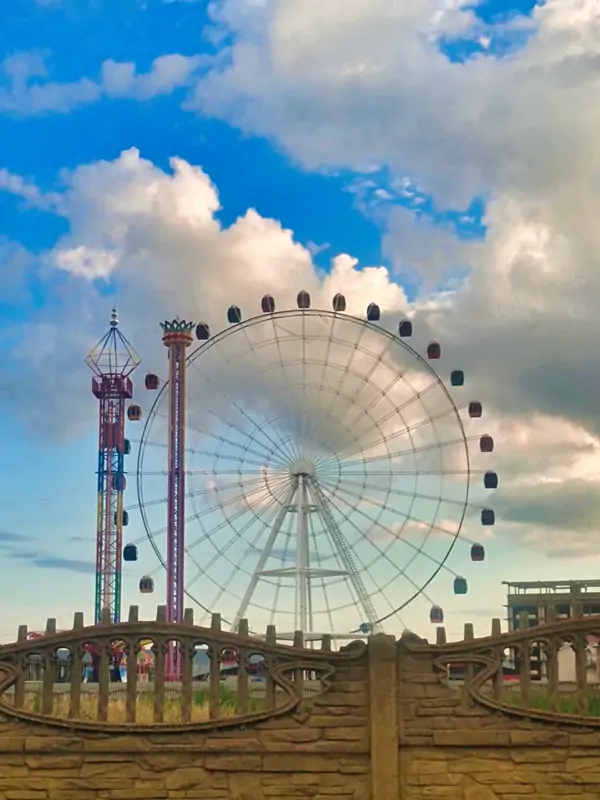
Across the industry, proven anchor and supporting equipment includes a vòng quay Ferris for skyline presence, a vòng xoay as a classic family anchor, xe đụng và một Trò chơi ghế bay for reliable throughput, a tàu điện không ray for kids and park circulation, and a Chuyến đi trên tàu cướp biển hoặc Trò chơi tháp rơi where the market wants mild thrills. Thrill-oriented parks add Xe đu quay and a family tàu lượn siêu tốc, while kids zones are often built around a self-control plane and other junior attractions.
| Evaluation Criterion | What to Check | Tại sao điều đó quan trọng |
|---|---|---|
| Chứng chỉ | CE marking, ISO 9001, EN 13814 / ASTM F24 compliance documentation | Gate requirement for permits, insurers, and inspectors |
| Reference projects | Installed parks similar to yours, contactable references | Best predictor of delivery and after-sales behavior |
| Documentation | Manuals, drawings, test reports, spare parts list | Required for inspection and long-term maintenance |
| Hỗ trợ cài đặt | On-site supervision, training, commissioning included? | Protects your schedule and safety acceptance |
| Spare parts & lead time | Availability, pricing, and delivery time for critical parts | Downtime cost far exceeds part cost |
| Delivery schedule | Confirmed production and shipping timeline, penalty clauses | A delayed ride delays your entire opening season |
New vs. used is a genuine trade-off. Used rides cost 30%–60% less but add inspection, re-certification, and often refurbishment costs, and the original documentation may be incomplete. New rides carry full certification, warranty, and manufacturer installation support — which matters when your opening date depends on a clean inspection. For a deeper view of price differences between suppliers, see our analysis of Tại sao giá dịch vụ đi xe lại khác nhau giữa các nhà cung cấp?.
For international buyers, plan the import chain early: confirm customs duties and taxes, check whether the certificate of origin qualifies for preferential tariffs, arrange container shipping and port handling, and budget for freight and insurance. Suppliers experienced in export markets provide export documentation, packing lists, and installation support as part of the package — confirm exactly what is included before signing.

10. Step 9: Construction, Installation, and Commissioning
Installation is an engineering project, not assembly work. It combines site preparation, foundations or ballasting, lifting, mechanical and electrical assembly, safety testing, and regulatory inspection. Typical timelines: most family rides install in 3–10 days, while large rides such as ferris wheels, pendulum rides, and roller coasters take 2–8 weeks, excluding 7–28 days of concrete curing where fixed foundations are required.
Fixed rides normally need engineered concrete foundations sized for soil bearing capacity and dynamic loads. An alternative growing in popularity is the Chuyến đi không cần nền tảng approach, which uses designed steel ballast and installs on flat hard surfaces without pouring concrete. Foundation-free systems can shorten installation time by 40%–60%, which is attractive for seasonal parks, rental sites, and phased openings. The choice between the two is covered in our comparison of foundation-free vs. fixed rides, and the engineering details in our Hướng dẫn thi công móng.
Commissioning is where projects are won or lost. Before opening, every ride needs functional testing of all cycles, load testing at rated capacity, emergency stop and brake tests, electrical insulation and grounding checks, and a documented trial operation witnessed by the inspecting authority. Keep the full acceptance file — installation reports, as-built drawings, electrical diagrams, and test certificates — for the ride’s entire operating life; insurers and inspectors will ask for it repeatedly. The same discipline applies to specific equipment classes, such as the Hướng dẫn lắp đặt băng chuyền xoay và bumper car installation and operation guidance.
Schedule installation so commissioning finishes 4–6 weeks before your target opening. That buffer absorbs inspection delays, weather, and the inevitable list of small fixes found during trial operation — without forcing you to open before the park is truly ready.
11. Step 10: Staff, Train, and Maintain for the Long Term
Operations are where parks make or lose their money. Staffing is the biggest operating cost, and it is also the biggest safety lever. A typical park employs one ride operator per ride per shift, plus admissions, food and beverage, cleaning, and security staff. Maintenance teams of one technician per 10–15 rides are common for small-to-mid-size parks, with certified specialists for electrical and structural work.
- Training programs must cover daily pre-opening checks, dispatch and evacuation procedures, and emergency response — documented and refreshed every season.
- Maintenance discipline: follow the manufacturer’s schedule, keep spare parts for critical components, and log every inspection. Our Danh sách kiểm tra bảo trì thiết bị giải trí shows how systematic upkeep extends equipment life.
- Daily, weekly, and monthly inspections by trained staff catch wear before it becomes a failure — and they are also what your insurance and inspector expect to see.
Budget maintenance at 3%–8% of revenue or 2%–5% of equipment value annually. Cutting maintenance to save money in year one is the fastest way to shorten equipment life and raise insurance costs in year three. Guests also vote with their feet: a ride that is down, a queue that is unclear, or a staff member who cannot answer a question all reduce per-visit spending and repeat visits.
12. Step 11: Plan the Marketing and Opening Launch
Opening day is not the start of marketing; it is the end of the pre-opening campaign. Start building the brand 6–12 months before opening: register the name and domain, build a website with opening dates and ride list, run social channels showing construction progress, partner with local schools, kindergartens, and hotels, and sell early-bird tickets and season passes before the gates open. Pre-sold passes do double duty — they generate cash flow and they tell you how many guests to expect on day one.
Plan the launch in two stages: a soft opening for invited guests, staff, and local media to shake out operational issues, followed by the public opening once daily operations are smooth. Revenue should not rely on the gate alone. The strongest parks build several streams: tickets and passes, food and beverage, games and merchandise, group and school programs, birthday parties and corporate events, and premium options such as fast-track passes and parking. Season passes in particular convert occasional visitors into year-round revenue and smooth out seasonal cash flow.
- Brand, website, and social channels
- Early-bird and season-pass presales
- School and group partnerships
- Media day and soft opening
- Entry tickets and ride passes
- Season passes and memberships
- Food, beverage, and merchandise
- Events, parties, and premium services

13. ROI and Payback: What the Numbers Really Look Like
Amusement parks are long-horizon assets. A well-run park typically earns operating profit margins of 15%–30% once attendance stabilizes, but it takes several years to reach that state. The table below shows typical payback ranges by project scale — treat them as planning benchmarks, not promises, because local demand, pricing, and operating discipline vary widely.
| Project Scale | Typical Investment | Typical Payback | Key Risk Drivers |
|---|---|---|---|
| Small family park / FEC | $1M–$5M | 3–6 years | Attendance ramp, staffing costs |
| Regional park | $10M–$50M | 5–8 tuổi | Seasonality, competition, financing cost |
| Destination theme park | $100M+ | 8–15 years | Tourism dependence, capital intensity |
In emerging markets, payback expectations are often shorter because land and labor costs are lower and leisure spending is growing quickly; in mature markets, payback is longer but cash flow is steadier. What separates profitable parks from struggling ones over time is rarely the headline ride — it is repeat visitation, per-visitor spending, and disciplined maintenance. An anchor attraction earns its keep by driving attendance; the supporting mix and the food program are what convert that attendance into profit.
14. Common Mistakes That Sink New Amusement Parks
Designing rides before proving demand is how projects burn capital on the wrong site.
A “mini-Disney” with no institutional funding stretches capital across too many attractions.
Outdoor parks in short-summer climates must structure cash flow and staffing for the off-season.
Parks that run out of cash before the second season rarely recover.
Zoning or license failure can strand committed equipment deliveries.
The lowest quote rarely includes documentation, support, and reliable spares.
Deferred maintenance raises downtime, insurance, and long-term replacement cost.
A rushed opening creates the safety and service reputation you will fight for years.
Tickets that are too cheap attract crowds but cannot fund maintenance or reinvestment.
Queues, food quality, cleanliness, and staff attitude drive repeat visits more than any single ride.
15. Field Experience: What Suppliers See Across Hundreds of New Parks
Manufacturers observe the same patterns across markets and continents. Projects with the best outcomes share three habits: they lock the business model before ordering equipment, they treat the supplier as a long-term engineering partner rather than a one-time vendor, and they plan installation and commissioning into the opening timeline from day one.
Sinorides, a Chinese amusement ride manufacturer founded in 1992, has delivered equipment to more than 1,200 projects worldwide and regularly consults on the procurement side of new parks. Their project teams consistently report that buyers who provide site surveys, soil reports, and a realistic schedule before signing receive more accurate quotes and faster delivery — while buyers who rush to sign without engineering data are the ones who face rework and delays. The company’s internal process for Cách Sinorides sản xuất và lắp đặt các trò chơi giải trí is a useful reference for what a complete procurement and installation workflow should look like — from engineering review to on-site supervision and training.
“The parks that succeed treat the opening season as a learning phase, not the finish line. They reserve budget for fixes, staff training, and marketing beyond day one. That reserve is usually the difference between a park that grows and one that stalls.”
16. Frequently Asked Questions
Chi phí để mở một công viên giải trí là bao nhiêu?
A small family park or indoor FEC typically costs $1 million to $5 million, a regional park $10 million to $50 million, and a destination theme park $100 million or more. Land, infrastructure, and working capital usually exceed the ride budget; rides account for roughly 30%–45% of total capital expenditure.
Mất bao lâu để xây dựng một công viên giải trí?
Most projects take 12 to 36 months from concept to opening day. Allow 3–6 months for feasibility and business planning, 3–9 months for design and permits, and 6–18 months for construction and installation, plus a commissioning buffer before the opening season.
Kinh doanh công viên giải trí có mang lại lợi nhuận cao đến mức nào?
Các công viên được quản lý tốt thường đạt tỷ suất lợi nhuận hoạt động từ 15% đến 30% sau khi lượng khách tham quan ổn định. Thời gian hoàn vốn thường là 3 đến 6 năm đối với các công viên quy mô nhỏ, 5 đến 8 năm đối với các công viên khu vực và 8 đến 15 năm đối với các dự án điểm đến. Khả năng sinh lời phụ thuộc rất nhiều vào số lần quay lại, mức chi tiêu trên mỗi khách tham quan và kỷ luật trong công tác bảo trì.
Giá vé một trò chơi tại công viên giải trí là bao nhiêu?
Giá vé các trò chơi mới dao động từ khoảng $20.000 đến $80.000 cho xe đụng, $30.000 đến $150.000 cho đu quay, từ $60.000 đến $300.000 cho tàu cướp biển, và từ $250.000 đến $1,5 triệu cho tàu lượn siêu tốc dành cho gia đình. Các bánh xe Ferris cỡ lớn có thể vượt quá $1 triệu. Chi phí vận chuyển, móng nền và lắp đặt được tính riêng.
Tôi có cần giấy phép để mở một công viên giải trí không?
Yes. Most jurisdictions require a business license, construction and building permits, an amusement operation license, fire safety approval, food and beverage permits, and ride inspection and registration. Requirements and timelines vary by country and state, so confirm with your local authority early — typically 30 to 90 days or more.
Kích thước lý tưởng nhất cho một công viên giải trí nhỏ là bao nhiêu?
Một công viên gia đình quy mô nhỏ thường có diện tích từ 1 đến 5 hecta, với 10 đến 20 trò chơi và điểm tham quan, hướng đến lượng khách từ 100.000 đến 300.000 lượt mỗi năm. Các trung tâm giải trí trong nhà (FEC) thường có diện tích từ 1.000 đến 8.000 mét vuông. Nên chọn quy mô phù hợp với quy mô dân số khu vực phục vụ và dự trù không gian cho việc mở rộng theo từng giai đoạn.
Các công viên giải trí kiếm tiền như thế nào?
Các công viên giải trí thu nhập từ vé vào cửa và thẻ trải nghiệm trò chơi, thực phẩm và đồ uống, trò chơi và hàng hóa, thẻ vào cửa theo mùa, các chương trình dành cho nhóm và trường học, các sự kiện, cũng như các dịch vụ cao cấp như thẻ ưu tiên vào cửa và dịch vụ đỗ xe. Các công viên thành công thường thiết kế nhiều nguồn thu nhập khác nhau để chi tiêu của mỗi du khách không chỉ giới hạn ở giá vé vào cửa.
Một công viên giải trí cần bao nhiêu khách tham quan để hòa vốn?
Sử dụng công thức: chi phí hoạt động cố định hàng năm chia cho (doanh thu trên mỗi khách tham quan trừ đi chi phí biến đổi trên mỗi khách tham quan). Ví dụ, với chi phí cố định là $900,000, doanh thu trên mỗi khách là $12 và chi phí biến đổi là $4, công viên cần khoảng 112,500 lượt khách mỗi năm để hòa vốn trước khi thu hồi vốn đầu tư.
Với số vốn hạn hẹp, tôi có thể mở một công viên giải trí được không?
Yes, by choosing a low-entry model: an indoor FEC, a small family park, or a seasonal carnival-style operation. Keep phase one small, use phased expansion, reserve 6–24 months of working capital, and consider foundation-free rides to cut installation time and site costs.
Các tiêu chuẩn an toàn nào được áp dụng cho các trò chơi tại công viên giải trí?
Ride design, manufacture, operation, and maintenance should align with EN 13814 in Europe, ASTM F24 practice standards such as ASTM F1193 and F2291 in North America, and ISO 17842 internationally. CE marking confirms EU conformity. Local authorities may add country-specific requirements such as GOST in Russia and CIS markets.
Làm thế nào để chọn nhà cung cấp thiết bị giải trí?
Check certifications (CE, ISO 9001, EN 13814 or ASTM compliance), visit reference projects, review documentation quality, confirm installation support and training, and compare spare-part lead times. Delivery schedule and contract terms matter as much as the price — a delayed ride delays your entire opening season.
Tôi nên mua thiết bị giải trí mới hay đã qua sử dụng?
Used rides cost 30%–60% less but add inspection, re-certification, and often refurbishment costs, and documentation may be incomplete. New rides include full certification, warranty, and manufacturer installation support. For a first park, new equipment reduces the risk of inspection and opening delays.
Thời gian hoàn vốn của một công viên giải trí là bao lâu?
Typical payback is 3 to 6 years for small family parks, 5 to 8 years for regional parks, and 8 to 15 years for destination theme parks. In faster-growing emerging markets, payback can be shorter because land and labor costs are lower. Treat these as planning benchmarks, not guarantees.
Tôi cần loại bảo hiểm nào khi đến công viên giải trí?
Typical coverage includes general liability, property, ride-specific coverage, workers’ compensation, and business interruption. Premiums depend on ride count, park size, and claims history. Some insurers require manufacturer-confirmed installation and documented inspection records before covering a ride.
Ready to Turn Your Concept into a Realistic Equipment Budget?
A credible ride mix and budget is the foundation of every bankable park plan. Explore the Thiết bị công viên giải trí range, review the full Trò chơi tháp, or talk to a project consultant about site surveys, layouts, and phase-one ride lists.
Về Sinorides
Sinorides (Henan Swonder Amusement Rides Co., Ltd.) is a Chinese amusement ride manufacturer established in 1992, with more than 30 years of experience in design, manufacturing, and export. The company supplies a full range of equipment for new parks — ferris wheels, pirate ships, drop towers, pendulum rides, flying chair rides, family roller coasters, trackless trains, bumper cars, carousels, self-control planes, and dedicated kids and family ride lines.
Sinorides products are manufactured under an ISO quality management system, carry CE certification for the European market, and are engineered to align with EN 13814, ASTM F24, and ISO 17842 safety practices. The company supports custom design and themed packaging, offers foundation-free options that reduce installation time, and has delivered equipment to more than 1,200 projects across the world. Each project includes installation guidance and after-sales support, with on-site supervision available where required.
Sinorides works with park investors, operators, and procurement teams at the planning stage — reviewing site conditions, recommending ride mixes, and preparing phase-one budgets — so the equipment decision fits the business model rather than the other way around.